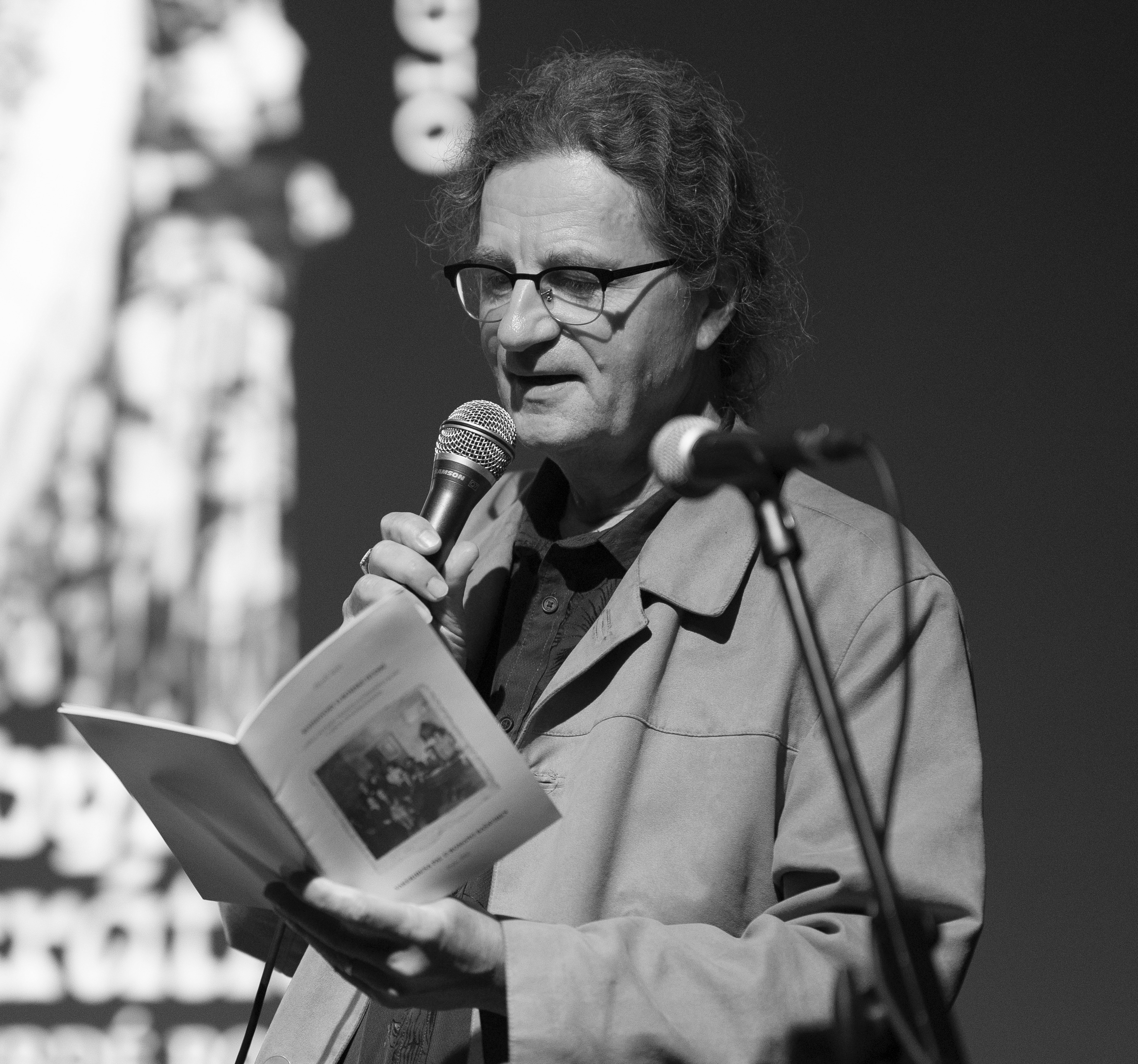
Zbyněk Andrš graduated from Romani studies at the Institute of South and Central Asia of Charles University’s Faculty of Arts and completed his doctoral studies at the Institute of Ethnology of Charles University’s Faculty of Arts. Before the revolution, he worked as a social curator for the Romani population of Prague 7. In the 1990s, he was, among other things, editor of the magazines Romano Gendalos / Romani Mirror and Gendalos/Mirror, manager of Nevo Romano Gendalos / New Romani Mirror, director of the Romano Džaniben Foundation, and external contributor to the Romani broadcasts of ČRo Regina Praha. At the turn of the millennium and in the 2000s, he worked as a lecturer at the Multicultural Centre Prague and the Museum of Romani Culture, taught at the Evangelical Academy in Prague, the Romani High School in Kolín and Čáslav, the Centre for Romani Studies at J. E. Purkyně University in Ústí n. L, and the Institute of South and Central Asia at Charles University. Since 2004, he has been working at the Department of Social and Cultural Anthropology (formerly KSV) at the Faculty of Arts of the University of Pardubice. He focuses mainly on the language, oral tradition, and ethnohistory of the Roma from the perspective of linguistic anthropology, folklore studies, and visual anthropology. He translates and edits texts by Romani authors.
As a creator, he has made music documentaries, curated exhibitions and written academic articles and books - Romani Music in the Course of Time (documentary, 2020); Lavutara: The Paths of Romani Musicians and Their Songs (exhibition at the Museum of Romani Culture, 2019–2020), author of the libretto for one hall and external curator; Macedonian Roma through the Lens of German Soldiers (exhibition of photographs from his own collection, Zahradník Gallery 2018), accompanying event of the Khamoro International Festival; Our God is Gold: Vlashika Rom at a Crossroads? (In Ethnologia Actualis, vol. 16, No. 2/2016); The Song Folklore of the Roma in the Slovak and Czech Republics: Ethnosemantic and Ethnohistorical approach (monograph, Kher, 2016); Roma Songs and Two Rites of Passage (documentary, 2014); History of Translation from Romani into Czech and from Czech into Romani (article, 2011); Conversations about Romani Music / Vakeribena pal o romano bašaviben: A Picture of the Musical Tradition of Slovak Roma in their Oral Presentation (self-published by Z. Andrš, 2002); Gejza Demeter: Paradise on Earth (editor, Romani fairy tales, Triáda, 2001).
Photo: Author's private collection