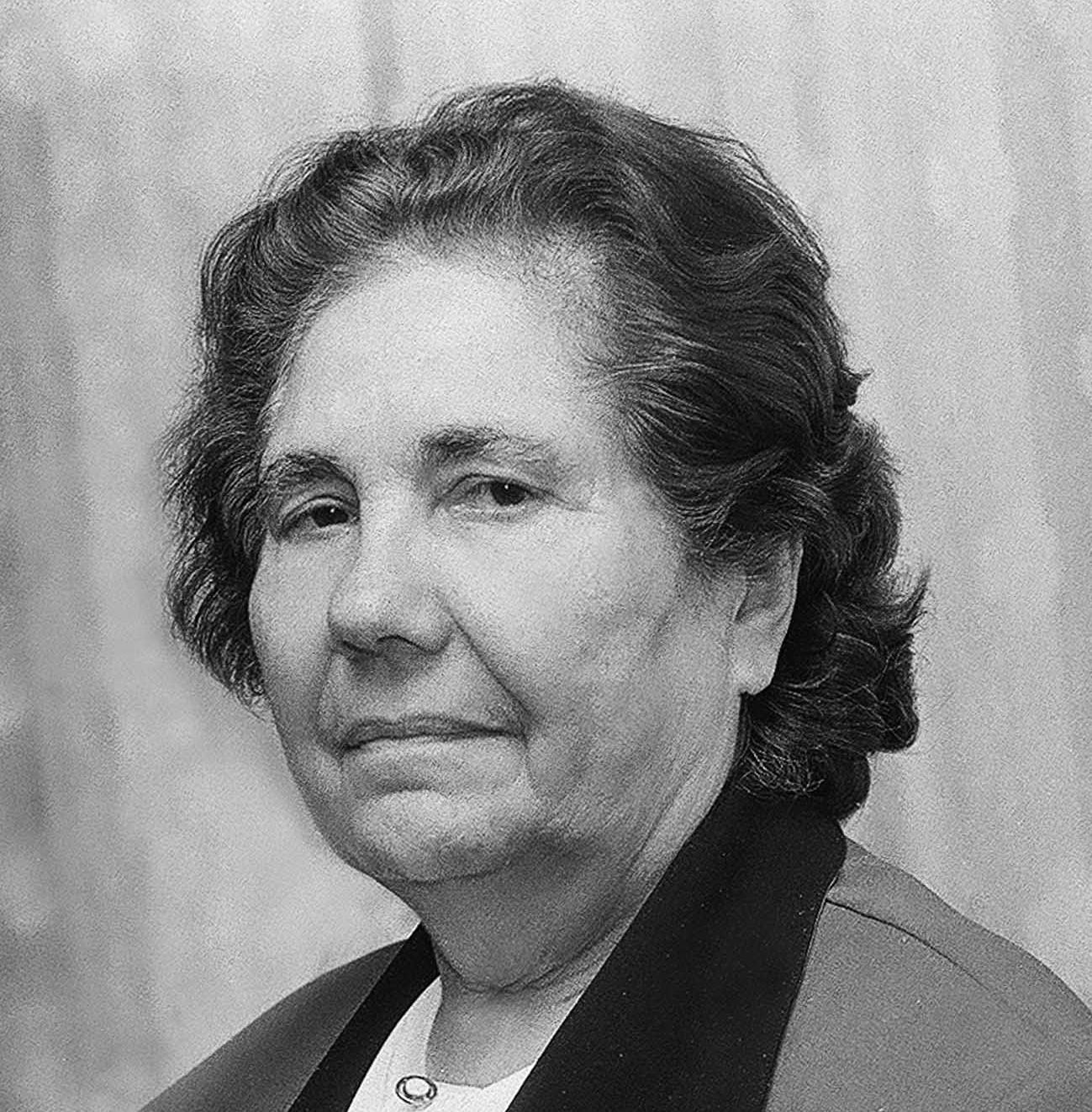
Elena Lacková is the earliest Romani writer known in the former Czechoslovakia. She was born and raised in a Romani settlement in eastern Slovakia. At the age of 50 (already a grandmother of nine grandchildren), she graduated from the Faculty of Arts at Charles University, where she studied public education and journalism.
In 1947, she wrote (in Slovak) her first play, The Burning Gypsy Camp, in which she addressed the persecution of Romani people in Slovakia during the war. She staged the play with an amateur troupe made up of family and friends, and they successfully toured with it for two years throughout eastern Slovakia and also in western Bohemia. Thanks to these activities, she became one of the Romani activists enlisted to work with the Romani population. She completed residential training in public education, served as an educational inspector for the Prešov KNV (Regional National Committee) and continued in this role until her retirement. Her works were published in the first anthologies of Romani literature. She returned to her literary work after retiring in 1980. She wrote in Slovak and Romani across various genres: poetry, ballads, short stories, fairy tales, and one-act plays about Romani life. She published in a wide range of Romani magazines (Romano ľil, Romano nevo ľil, Amaro lav, Lačho lav, etc.). The radio adaptation of the legend of Žužika (1988, dir. Josef Melč) was hailed as one of the best adaptations of the year and won the prestigious Prix Bohemia award. Lacková, however, is best known for her colourful memoir Narodila jsem se pod šťastnou hvězdou (Triáda 1997, published in English as A False Dawn: My Life as a Gypsy Woman in Slovakia), which was created in close collaboration with Romani studies scholar Milena Hübschmannová.